The Oklahoma City Thunder franchise selected future NBA most valuable player award winners in three straight years — Kevin Durant (2007)…
NBA’s Biggest WTF “What If”?
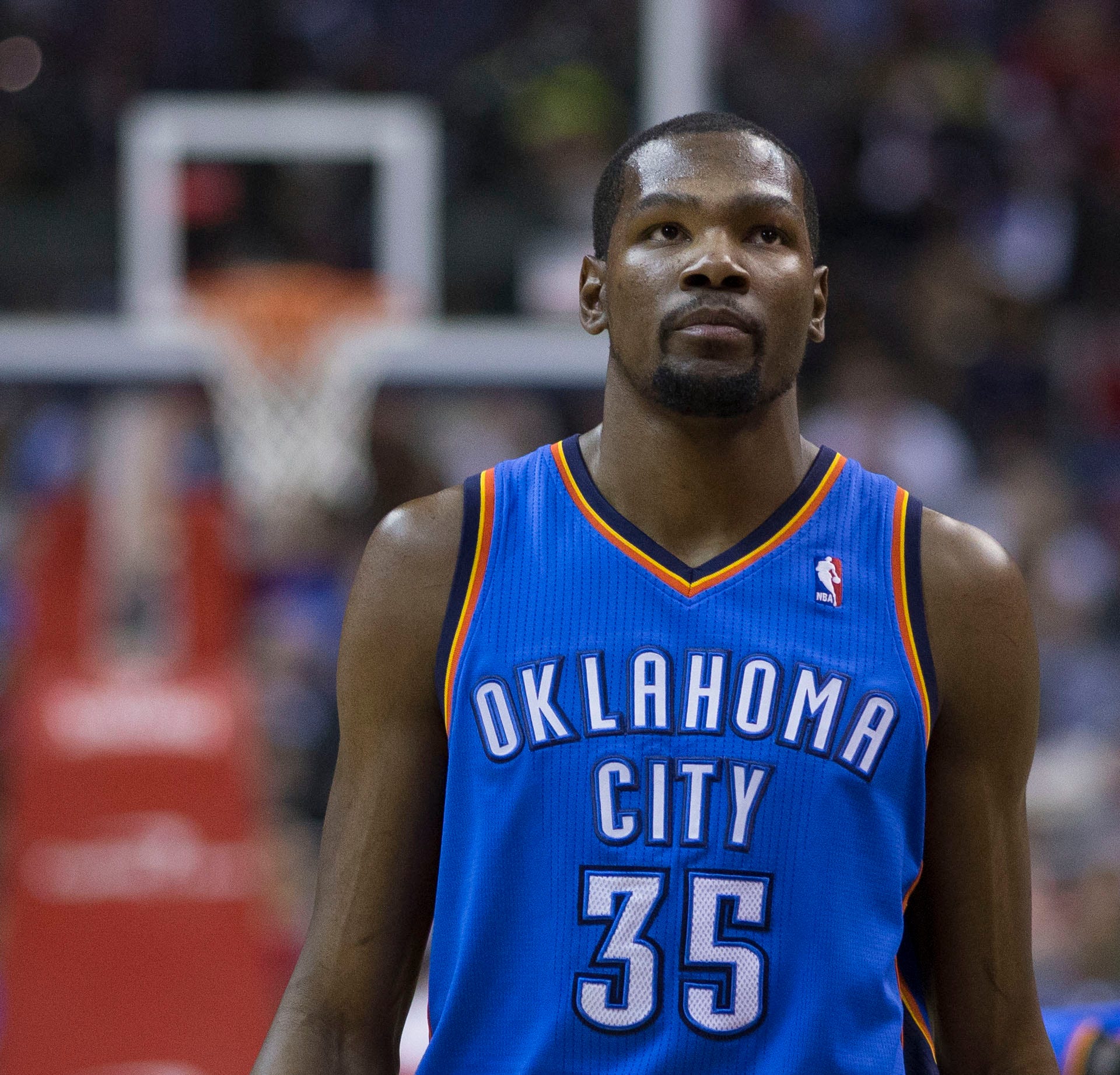
The Oklahoma City Thunder franchise selected future NBA most valuable player award winners in three straight years — Kevin Durant (2007), Russell Westbrook (2008), and James Harden (2009). They also hit on some solid rotation starters in Carl Landry (2007), Serge Ibaka (2008), Eric Bledsoe (2010), Reggie Jackson (2011), and Steven Adams (2013). This core group had Oklahoma City in the 2012 finals, a series they would lose in five games to the Miami Heat. The trajectory following the 2011–2012 NBA season though was up and to the right, they were the western conference finals favorites for 2013. Then prior to the start of that season, they shocked the NBA by trading James Harden to the Houston Rockets. The threesome was broken up leaving us to question that decision forever.
“What If?”
The “what if” story today, six years later, is what if OKC had kept their three stars together? Harden has blossomed in Houston, finishing in the top 5 for MVP in all but one of his post-OKC years culminating in his MVP crown this year. Harden is now #10 in career active win shares. Durant is #5 and Westbrook is #18. All these guys are still in their primes (@30 or younger), and they fit perfectly on paper. The counterpoint is whether Westbrook & Harden’s style could be maximized by playing together.
My POV is playoff basketball is more iso-oriented than the regular season. Even the golden (state) standard for movement found itself in many isolation shot-making situations in the final two rounds of the western conference playoffs this year. The point is the Durant/Harden/Westbrook trio had shown tremendous regular season success AND delivered a finals appearance at the tender median age of 24.5. This group was going to be a force, one of the top finals contenders in the league. You can’t ever predict titles, however, this team was poised to be as likely as any other of winning from ’13 on.
Why?
OKC was close to the salary cap that year, a max salary for James Harden, due a new contract at the conclusion of ‘12-’13, would put them into luxury tax following a Westbrook extension and an already in place max deal with Kevin Durant. The rumor is OKC was unwilling to exceed a 4 year $55M deal, Harden wanted a 5year $80M deal. That $5M/year or $25M over the length of the deal would have put OKC into luxury tax territory in ‘13’-14, albeit only for a year or two due to the growth in the cap the league saw in 2015–2017.
OK, so What?
The irony is that Oklahoma City is now staring at a potential $150M tax liability, or a total of over $300M in salary and tax payments for this next year alone. Apparently, they will stretch or buyout Carmelo Anthony’s $28.7M, which by itself could save them up to a third of that $300M (or $100M in savings). Regardless, OKC is now potentially the biggest taxpayer, and this is a 4 seed team in a western conference that just got much harder (ascending teams in Minnesota, Denver, Utah, LA Lakers and Phoenix).
Summary
Oklahoma City fans were cheated by frugality from a likely dynasty run with three future NBA MVP’s. Ownership required management to not exceed the luxury tax, resulting in shipping out young James Harden, which upset Kevin Durant’s loyalty, and ultimately resulted in 2012 being the apex of this incredible collection of talent. Sam Presti, GM of OKC, deserves a ton of credit for consistently selected talented NBA players. However, he also deserves all the blame for not pushing back on his ownership group to not seize the moment 6 years ago to see what that group could have done. Now they’re paying the price for a mediocre team.
